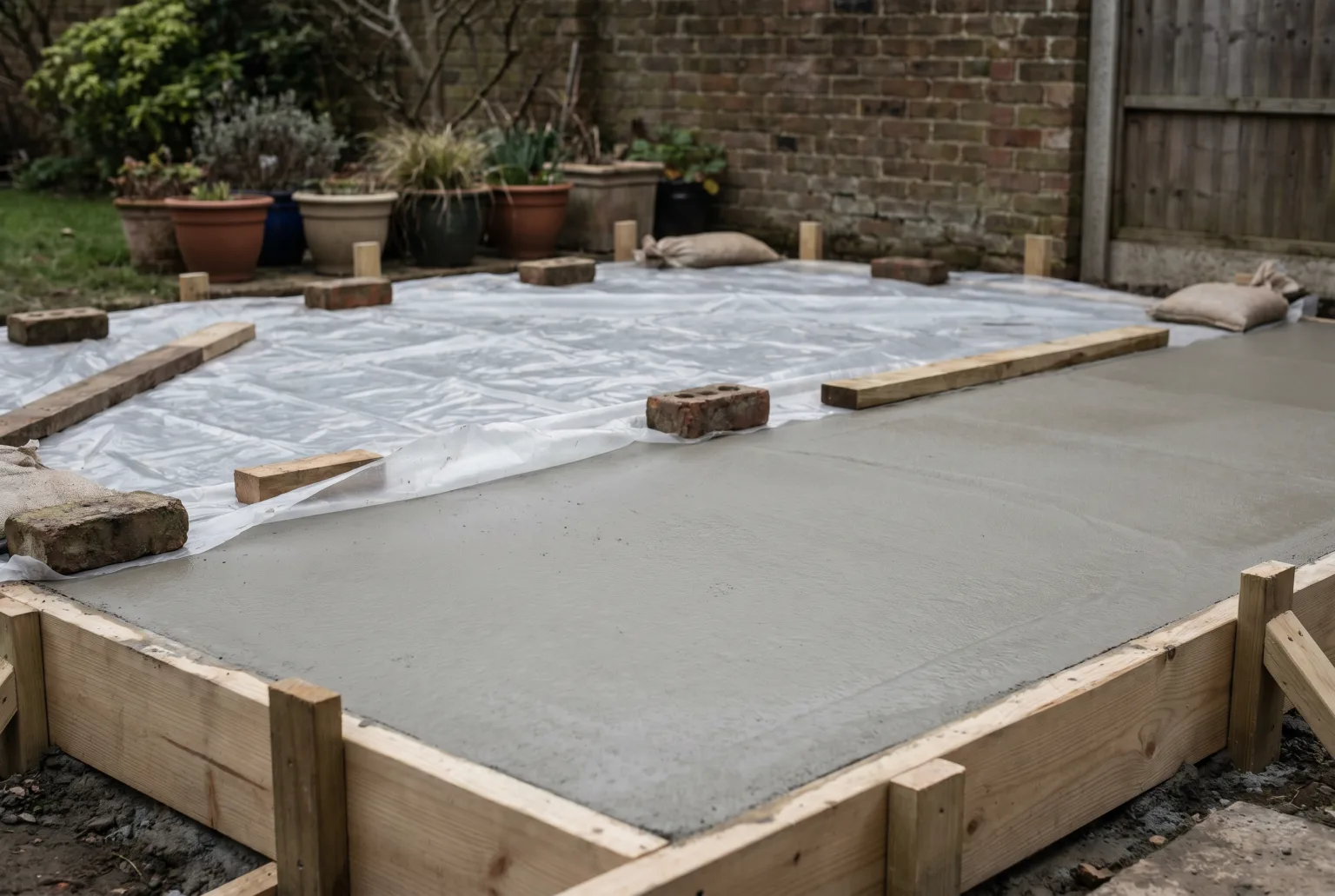
How Long Does Concrete Take to Set?
"When can I walk on it?" is the first question we get on every job. The short answer: it depends on the mix, the weather, and what you mean by "walk on it". The long answer, with real numbers for every stage, is below.
Quick answer
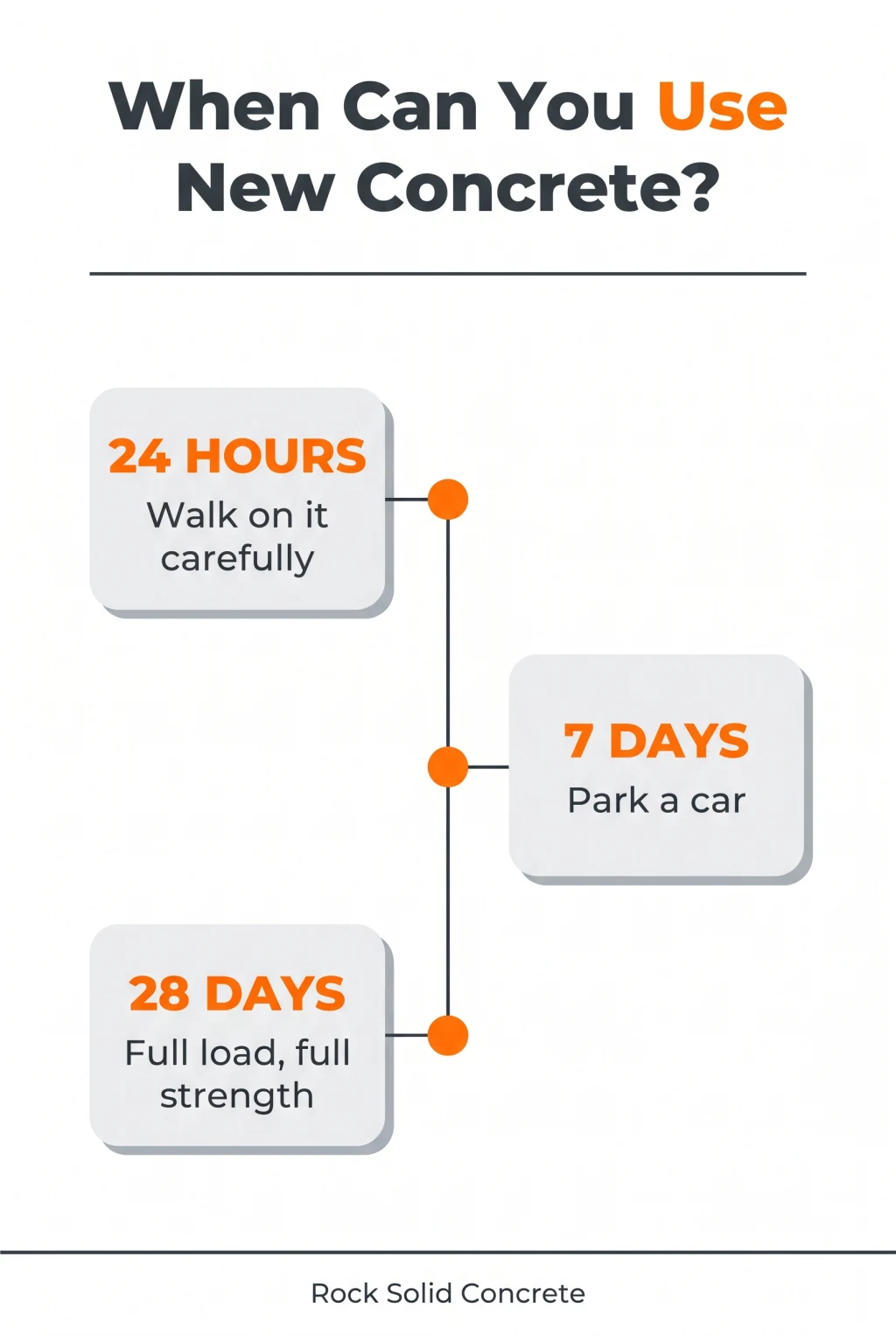
Concrete usually sets (stops being liquid) in 4 to 8 hours. You can walk on it carefully after about 24 hours, park a car after 7 days, and apply full load after 28 days. Setting is not the same as curing, which is the slower strength-gain process. For curing in depth, see our concrete curing time guide.
Setting vs curing, they're not the same
People use these interchangeably, but they're totally different things:
- Setting, the concrete stops being liquid and starts holding its shape. Typically 4-8 hours after pouring.
- Curing, the chemical reaction that builds strength. Starts the moment water meets cement and continues for months. The first 7 days are critical; you get 70% of final strength in 7 days, 90% at 14 days, and "100%" at 28 days, which is when strength is officially tested.
So concrete can be set (safe to walk on) long before it's cured (safe to load). Get those two mixed up and you can ruin a slab.
Real-world timings for a standard C28/35 slab
Times assume mild UK weather (10-20°C) and a standard C28/35 mix with proper curing. Reduce expectations in winter, extend wait times if curing is skipped.
What makes it set faster or slower
Temperature
Warm = faster. Cold = slower. Below 5°C the reaction almost stalls. Above 30°C it's too fast and the surface can crack.
Mix grade
Higher-strength mixes (C32/40+) contain more cement and develop early strength faster than low-grade foundation mixes.
Water-cement ratio
Wetter mixes (high slump) set slower and end up weaker. Don't ask the driver to "add water to make it easier", you're compromising the cure.
Admixtures
Accelerators cut setting time by 30-50% (useful in winter). Retarders extend the window for large pours and hot days.
Section thickness
Thicker pours generate more heat and cure faster at the core, but the surface still follows air temperature, protect thin slabs first.
Wind and humidity
Dry, windy days pull moisture out too fast, concrete looks set on top but is under-cured underneath. Cover with polythene.
How to help the cure (and not wreck it)
1. Protect from rain for the first 4-6 hours
Heavy rain during the set window washes cement out of the surface, leaving you with a weak, dusty top layer. Have polythene on site even if the forecast looks clear.
2. Keep it damp for 7 days
Counter-intuitive, but cement cures by reacting with water, not by drying out. Cover with polythene or hessian and spray water if it dries. A curing compound does the same job in one coat.
3. Don't overload early
7 days gets you 70% of final strength. Full design load before 14-28 days risks micro-cracking the slab that'll haunt you later.
4. In winter, insulate
Below 5°C, cover with straw or thermal blankets. Hydration stops at around 0°C, a frozen fresh pour can be damaged permanently. See our winter pouring guide.
Frequently asked timing questions
Can I walk on fresh concrete after 24 hours?
Yes, carefully, no tools, no running, no pressure-washing. It'll hold your weight but it's still weak enough to scuff the surface.
How long before I can lay blockwork?
5-7 days on a strip foundation or raft. Earlier is possible with a fast-set mix but check with the engineer first.
How long before I can drive on a new driveway?
7 days for a car, 14 days for daily van use, 28 days for a 3.5-tonne van or trailer.
When does concrete reach full strength?
"Full" strength is 28 days by convention, that's when BS EN 206 strength tests are done. But concrete keeps gaining strength slowly for years afterwards.
Does concrete set harder over time?
Yes, slightly. After 28 days it keeps gaining a few percent of strength each year for decades, as the cement continues to hydrate with any available moisture.
Safe timings to remember:
- 24 hours → walk carefully, strip vertical forms
- 3 days → light foot/barrow traffic
- 7 days → park a car, start blockwork
- 14 days → daily light vehicle use
- 28 days → full design load, HGVs, tractors
- Through the first 7 days → keep damp, protect from rain/frost
Pouring soon? Get the mix right first.
Choose your mix, enter your volume, and book next-day delivery. Our team can advise on timing and curing for your specific project.