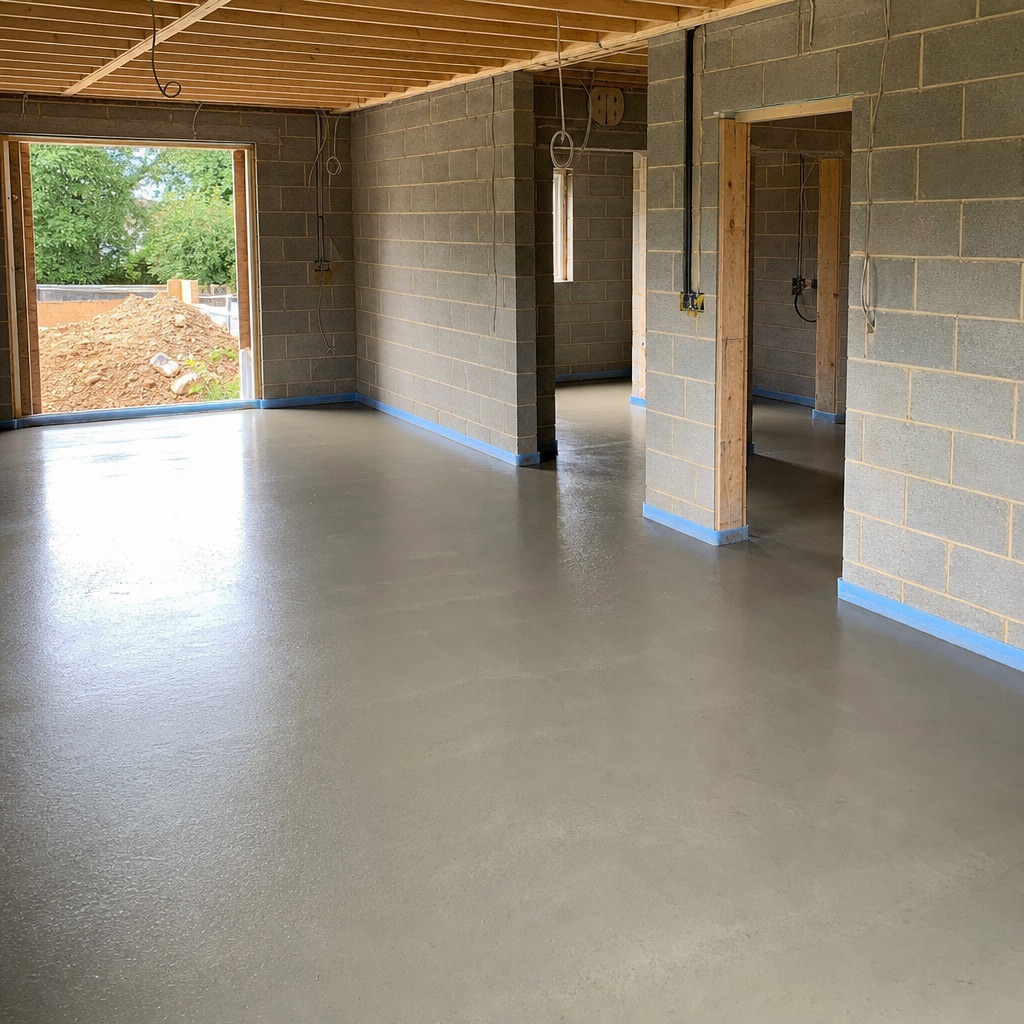
Internal Domestic Floors
GEN3, poured to last.
GEN3 ready-mix at 100mm on a compacted sub-base, the standard build-up for kitchens, utilities, hallways and whole ground-floor pours. From 1m³ upwards.
The Mix You Need
GEN3 Internal Floor Mix
- Mix grade
- GEN3 (C20/25)
- Slump
- 75mm (workable)
- Aggregate
- 20mm
- Slab depth
- 100mm typical
- Sub-base
- 100-150mm Type 1 MOT, compacted
- Damp-proof membrane
- 1200-gauge DPM
Volume Guide
How much concrete for a ground-floor slab?
Volumes based on 100mm slab. Add 10% wastage when ordering, the calculator does this automatically.
Kitchen / utility
3.5m × 3.0m
100mm slab
Hallway
4.0m × 1.5m
100mm slab
Single ground-floor room
4.5m × 4.0m
100mm slab
Open-plan ground floor
8.0m × 6.0m
100mm slab
Whole house refurb
10m × 8m
100mm slab
Why It Matters
Get this right and you won't redo it for 30 years
- GEN3 is the standard recommendation for internal domestic floor slabs, strong enough for household loads, easy to finish, and well within the spec for most ground-floor builds.
- A continuous 1200-gauge DPM under the slab, lapped up the walls to meet the wall DPC, is the difference between a dry floor and one that sweats every winter.
- A flat, well-compacted Type 1 sub-base does more for slab longevity than going thicker on concrete, get the prep right and 100mm of GEN3 lasts the life of the house.
- Volumetric mixers batch on site so you only pay for what is poured, ideal when you are not sure of the exact volume on a refurb or self-build.
Step by Step
How to prepare & pour
Strip back to subsoil
Lift the old floor, scrape off topsoil and any softened ground until you reach firm, undisturbed subsoil. Anything spongy underfoot has to come out.
Compact the sub-base
100-150mm of Type 1 MOT in 50mm lifts, whacker-plated until it rings solid. Top finished level enough to take the DPM cleanly.
Lay sand blinding (optional)
A 25mm sand blinding over the Type 1 stops sharp stones puncturing the DPM. Skip this if the sub-base is fine-graded already.
DPM and edge insulation
Roll out 1200-gauge polythene DPM with 150mm overlaps, tape the joints, and lap up the walls to meet the wall DPC. Heated floors get 100mm PIR over the DPM.
Set finished slab level
Mark the finished floor level on the walls, allowing for any floor finish. Set timber screed rails or use the wall as a guide.
Pour and float
Discharge from the wagon or use a barrow run. Tamp with a straight-edge, screed level off the rails, and steel-trowel to a hard finish if you are tiling or laying vinyl direct.
Cure under polythene
Cover the slab with polythene for 7 days so it cures slowly and evenly. Walk-on at 24-48 hours, but keep heavy loads off until day 7.
FAQ
Common questions
What mix should I use for an internal domestic floor?
GEN3 (C20/25) is the standard for ground-floor slabs in a domestic build. It carries normal household loads, finishes easily with a power-float, and is well within the spec for most building-regs jobs. For a workshop or garage where you will be wheeling heavy loads, step up to C25/30 or C28/35.
How thick does a ground-floor concrete slab need to be?
100mm is the standard for a domestic ground-floor slab on a properly compacted sub-base. If the slab carries internal walls or unusually heavy loads, your engineer may specify 125-150mm or A142 mesh reinforcement.
Do I need underfloor insulation?
For a heated floor, yes, 100mm PIR over the DPM is typical for current building regs. The structural slab sits on top of the insulation with a second slip-membrane in between. We can advise on the right mix and depth once you know the floor build-up.
How much concrete do I need for a 30m² ground floor?
Roughly 3m³ at 100mm depth (30 × 0.1 = 3). Always add 10% wastage on top, so order 3.3m³ rounded up. Use our concrete calculator for exact figures.
Can you pump concrete into a house?
Yes. A line pump pushes mix through ground-level pipework into the room, useful where the wagon cannot back up to the door or the doorway is narrow. We confirm the pump option when you book.
Should I use ready-mix or mix it myself for a small floor?
Anything over about 0.75m³ is faster, cheaper and stronger as ready-mix than barrowing bag mixes. The slab cures as one continuous piece instead of layered batches, so it is less likely to crack across joints.
How long before I can lay tiles or vinyl on a new slab?
A power-floated slab is hard enough to walk on at 24-48 hours. For tile and resin finishes, wait 28 days for full cure, or use a damp-meter to confirm the slab is below 75% relative humidity before sealing it.
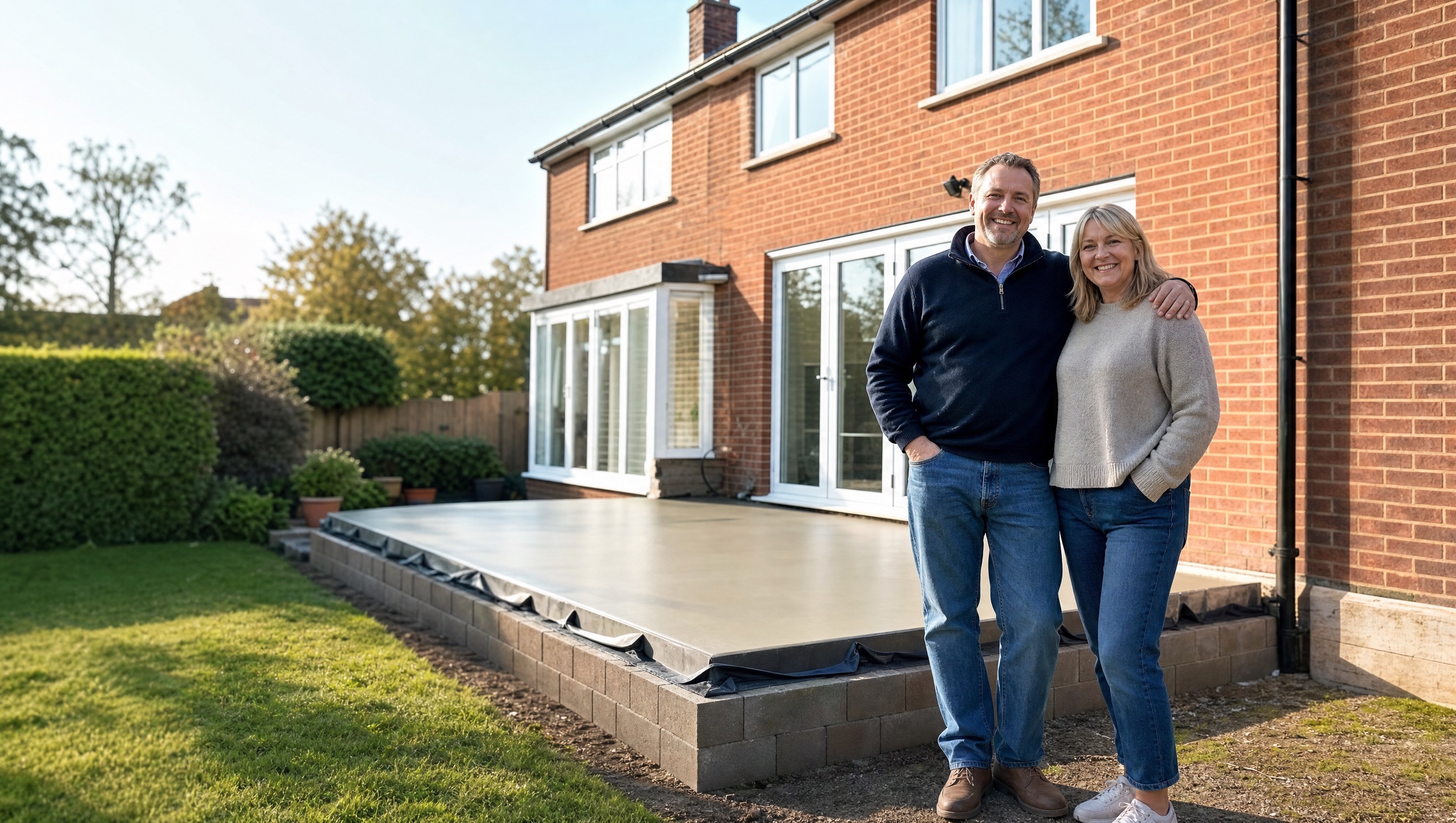
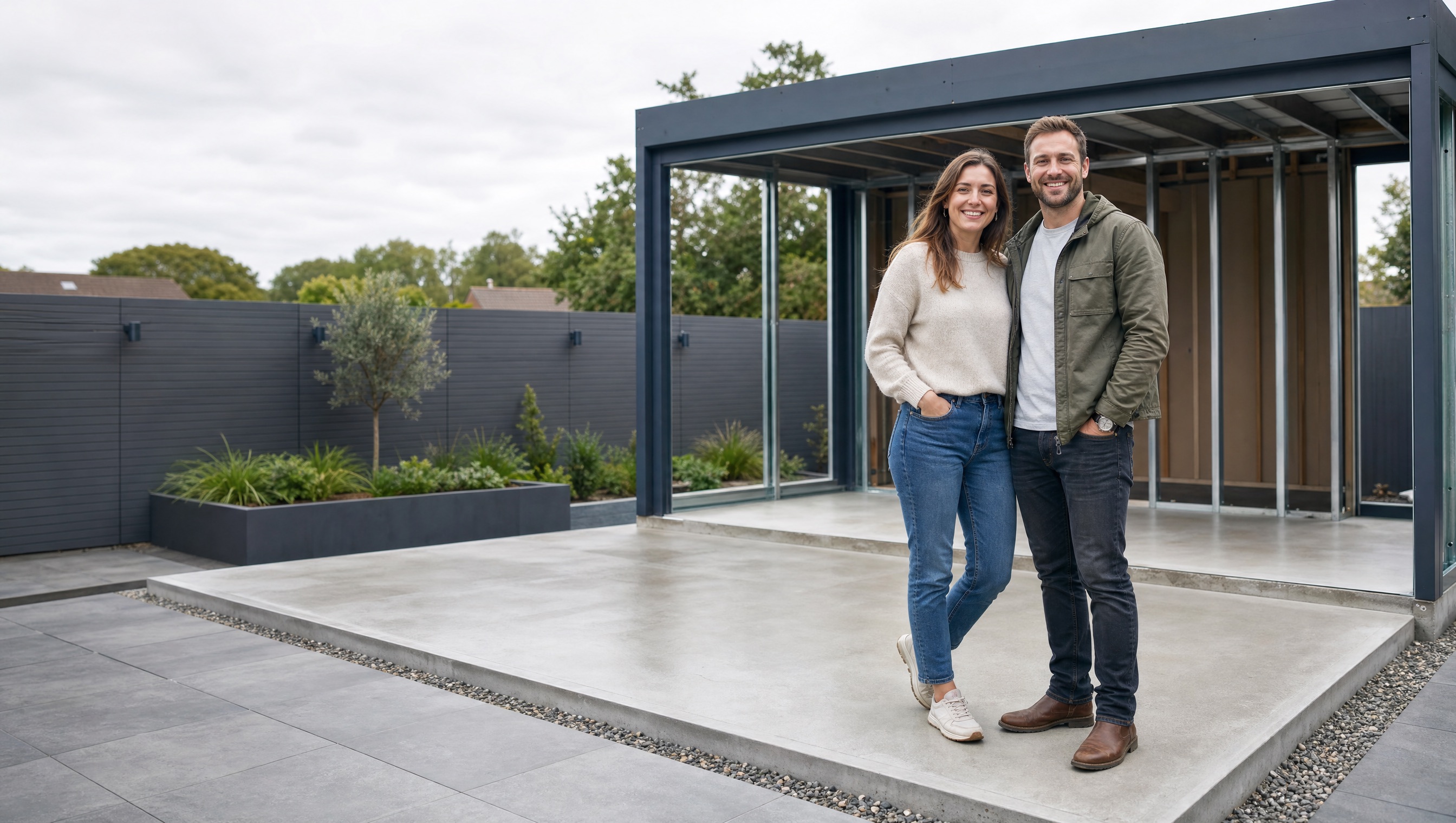

Ready to order?
Instant price in 60 seconds. Next-day delivery subject to availability. With volumetric, pay only for what's poured.