Raft Foundations
Engineered pours for problem ground.
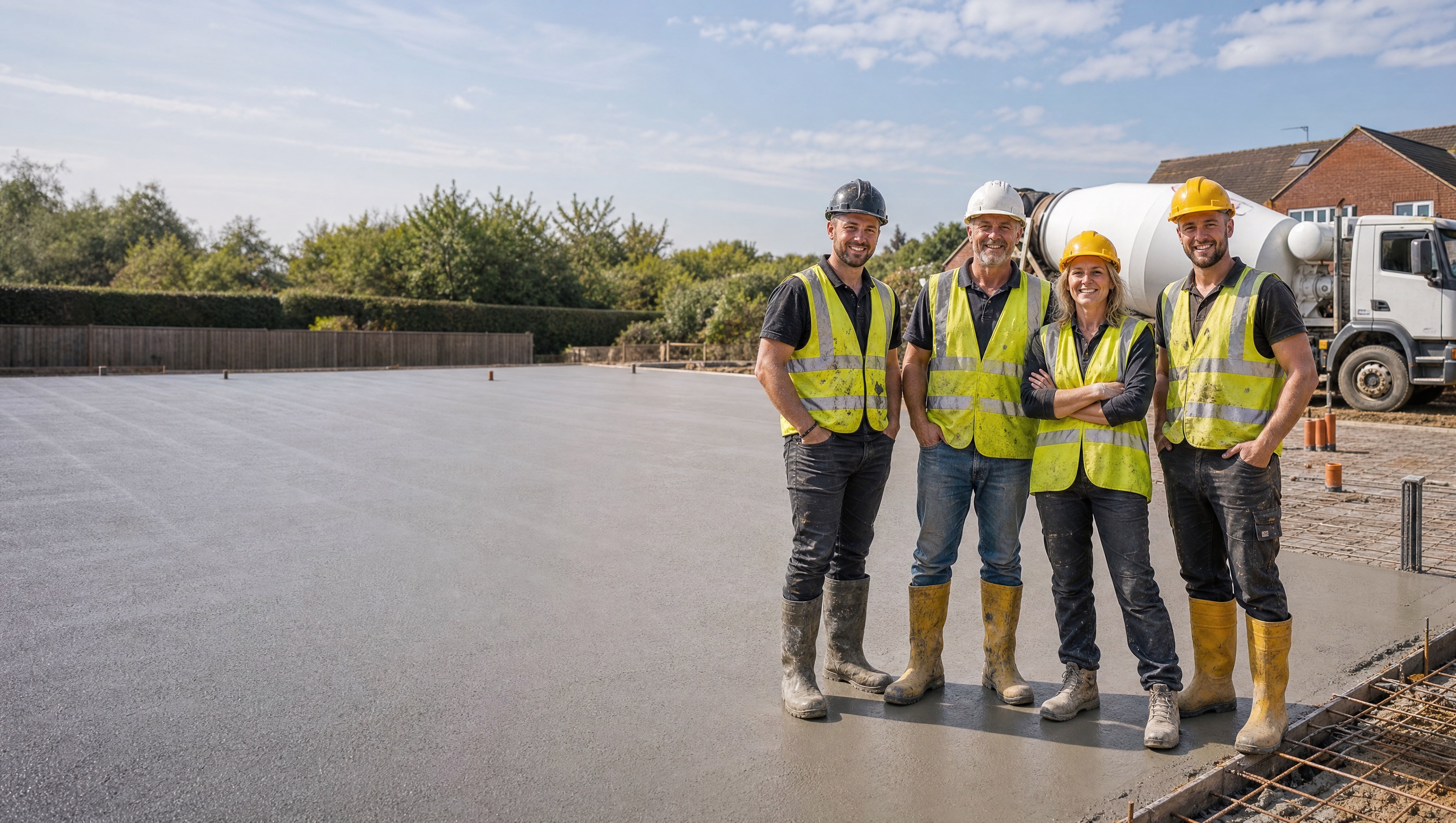
Reinforced C28/35 or C32/40 rafts poured continuously, scheduled to your groundworker. BCO paperwork, two Midlands plants, 100m³+ per day for whole-house pours.
The Mix You Need
C28/35 Reinforced Raft Mix
- Mix grade
- C28/35 to C32/40 (engineer-specified)
- Slump
- 75-100mm
- Aggregate
- 20mm
- Raft depth
- 300-450mm (thicker at edges)
- Reinforcement
- Twin-layer A393 mesh or bar cage per SE design
- Sub-base
- 150mm Type 1 MOT on DPM and insulation
Volume Guide
How much concrete for your raft?
Volumes are rough guides assuming 400mm average depth including thickened edges. Your structural engineer's design will give exact volumes per bar and mesh layout.
Small extension raft
6m × 5m
400mm average depth
Garden room / annexe
8m × 6m
400mm average depth
House footprint
12m × 9m
400mm average depth
Large new-build
15m × 12m
400mm average depth
Why It Matters
Get this right and you won't redo it for 30 years
- Rafts spread the load across the whole footprint instead of relying on narrow trench fill. On clay, fill, or variable ground they prevent the differential settlement that cracks walls.
- Over shrinkable clay or old make-up ground, a stiff reinforced raft is often the lowest-risk foundation, and sometimes the only one a structural engineer will sign off.
- A raft integrates foundation, ground-bearing slab, and insulation into one clean pour. Less labour, faster time to DPC, fewer cold joints than strip-and-slab.
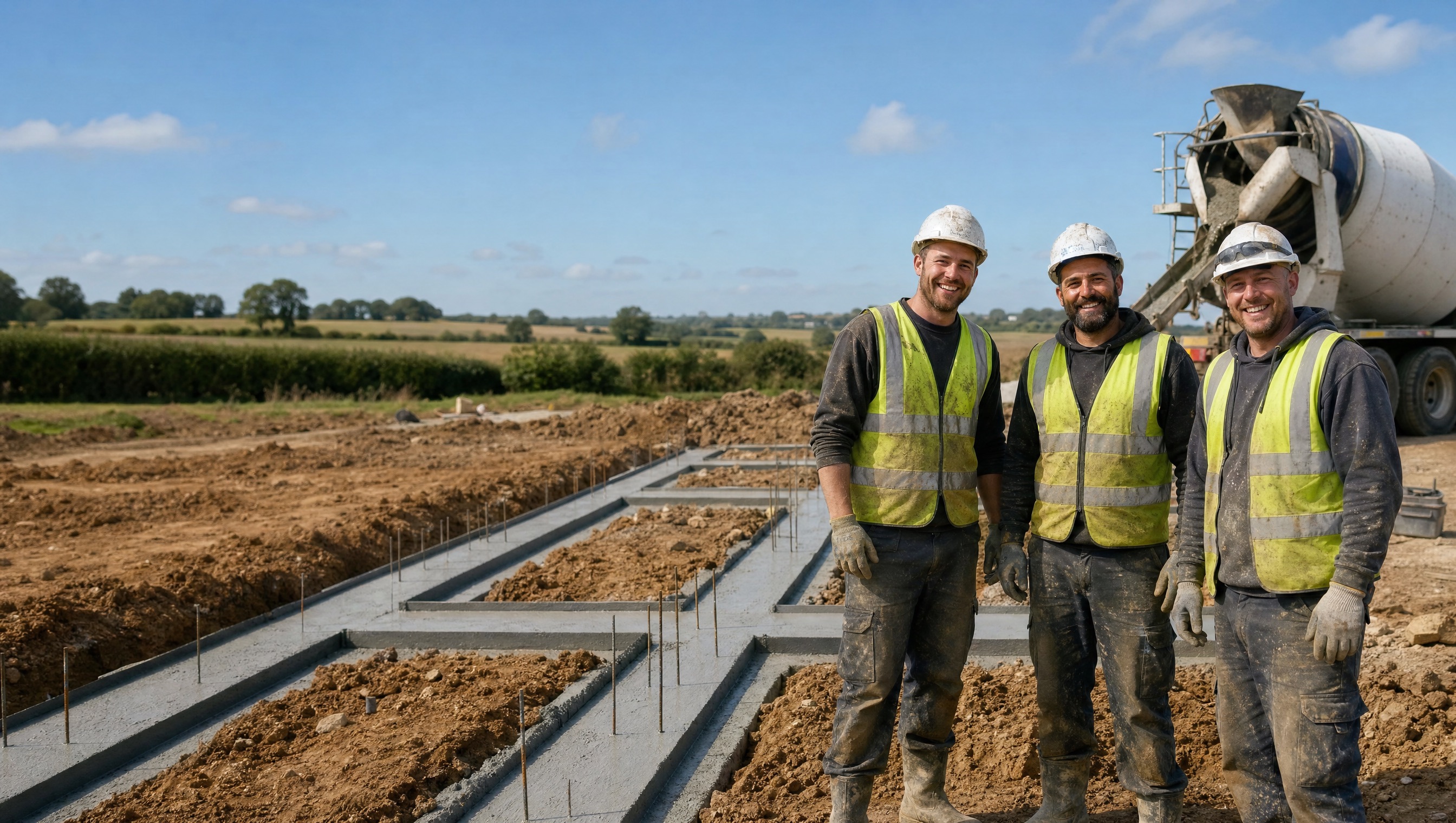
- Continuous pour is critical for raft integrity. Our two Midlands plants schedule wagons every 15-20 minutes so the entire raft is monolithic with no joints.
Step by Step
How to prepare & pour
Get an engineered design
A raft foundation is not a DIY spec, you need a structural engineer to size the slab, thickened edges, reinforcement and mix grade for your ground conditions. Bring a soil report; they'll return a design the BCO will accept.
Excavate and level
Dig to engineer-specified depth, typically 450-600mm below finished floor level. Strip topsoil, remove any soft spots, blind with sand or lean-mix concrete if required. Check levels carefully, the raft is only as flat as the ground you prep.
Sub-base, DPM & insulation
Compact 150mm Type 1 MOT in 75mm layers. Lay 1200-gauge DPM with 300mm taped laps, turning up the edges. For heated / Passivhaus buildings, lay 100-150mm PIR insulation over the DPM before reinforcement.
Formwork for thickened edges
Raft edges and internal beams are usually thickened (typically 450mm+) to carry wall loads. Formwork or strip-dug edges must be dead level, any dip becomes an out-of-level DPC line later.
Install reinforcement cage
Fix the engineer-specified mesh or bar cage on spacers, typically A393 top and bottom with 50mm cover, edge cages bent around the thickened beams. Tie everything rigid before pour day; movement during pour is a defect.
Continuous pour & cure
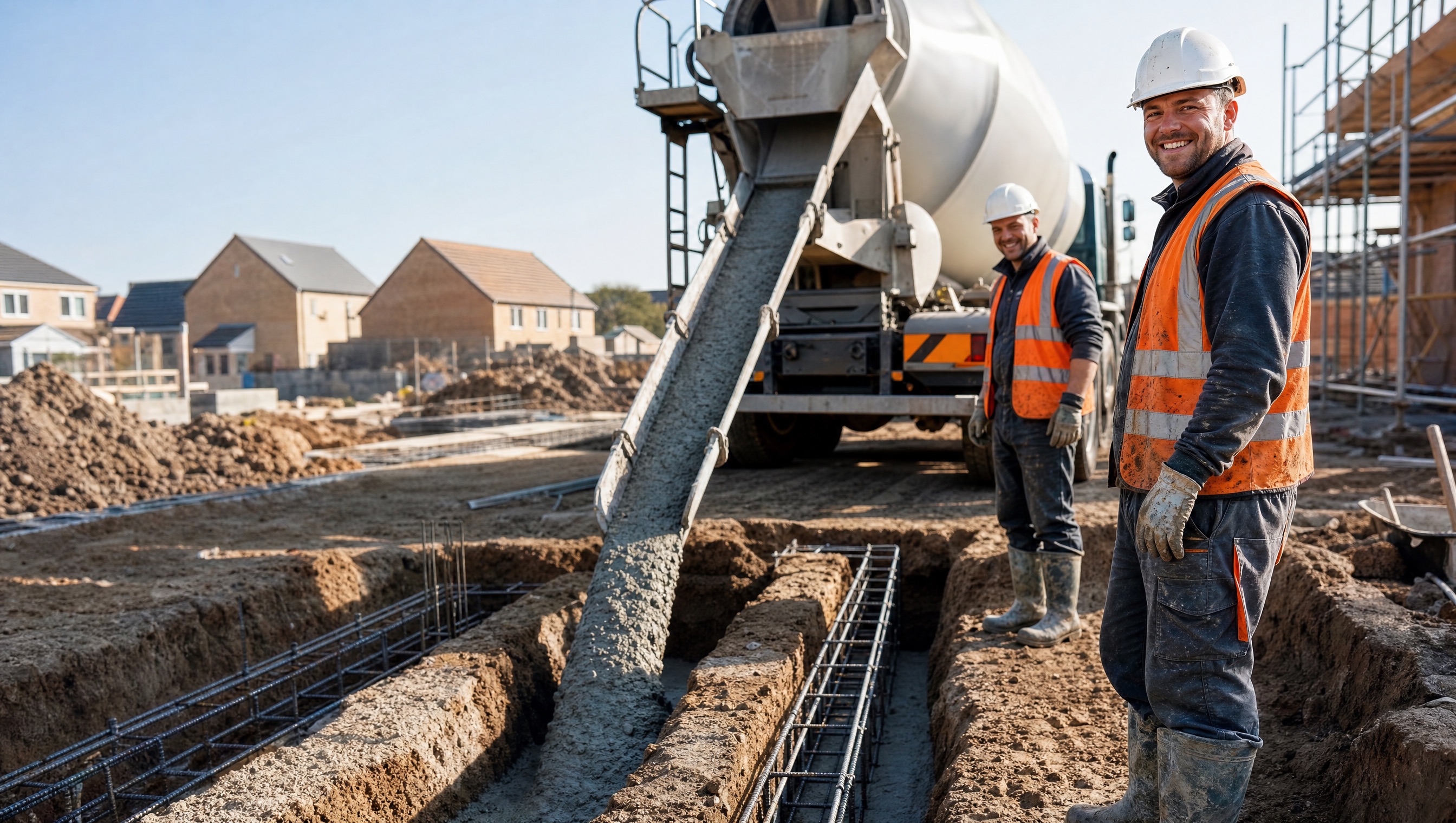
Pour the entire raft in one visit with wagons scheduled back-to-back. Vibrate-poke or use a poker vibrator around edge cages. Tamp level, float, and cure under polythene for 7 days minimum. Engineer signs off before walls go up.
FAQ
Common questions
When do I need a raft instead of trench fill?
Shrinkable clay, made ground / fill, sites over old mines or drains, and high water tables are the usual triggers. Trench fill relies on the soil below being uniform, if it isn't, a raft redistributes the load and prevents differential settlement.
What mix for a raft foundation?
Most domestic rafts are C28/35. Larger or more heavily loaded rafts (double storey, clay sites) step up to C32/40. Always follow the structural engineer's spec, mix grade affects design cover and reinforcement calcs.
How thick does the raft need to be?
Typical domestic rafts are 250-300mm in the middle with 450-600mm thickened edges or beams. Ground conditions and loads drive the number, a good SE will give you the minimum viable spec, not the safest possible.
Can you pour a 40m³+ raft in one go?
Yes, our two Midlands plants combined run 100m³+ per day. We schedule wagons every 15-20 minutes for continuous pours. Book 1-2 weeks ahead for 40m³+ and confirm the pour-day forecast 48 hours before.
How long until I can build on the raft?
7 days before light loads (blockwork to DPC), 14 days before full loading of walls, 28 days for the raft to reach design strength. Cure under polythene or curing compound for at least the first 7 days, especially in summer.
Do you provide paperwork for Building Control?
Yes, delivery tickets, conformity certificates and mix design can be supplied for the BCO. If you're a self-builder or groundworker, flag it when ordering and we'll format the paperwork for the site file.

Ready to order?
Instant price in 60 seconds. Next-day delivery subject to availability. With volumetric, pay only for what's poured.